
What is music therapy?
Music therapy is an Allied Health Profession which, provided by a qualified practitioner, is widely evidenced to offer a meaningful way for people to realise their own creative ability, whatever their situation. Programmes like Gareth Malone’s choirs or Vicky McClure’s Dementia Choir have helped to show what we already know – that music can be deeply therapeutic and transformative.
The Nordoff Robbins approach to music therapy maintains that music is an inherent part of being human, and therefore therapy focuses on everyone as a musician, even if they say, “I’m not musical”! Trained in this approach, I tune into the character of each person’s playing or singing, and pay close attention to their movement, reaction or expression to capture and celebrate whatever they can do, however minimal that may be.
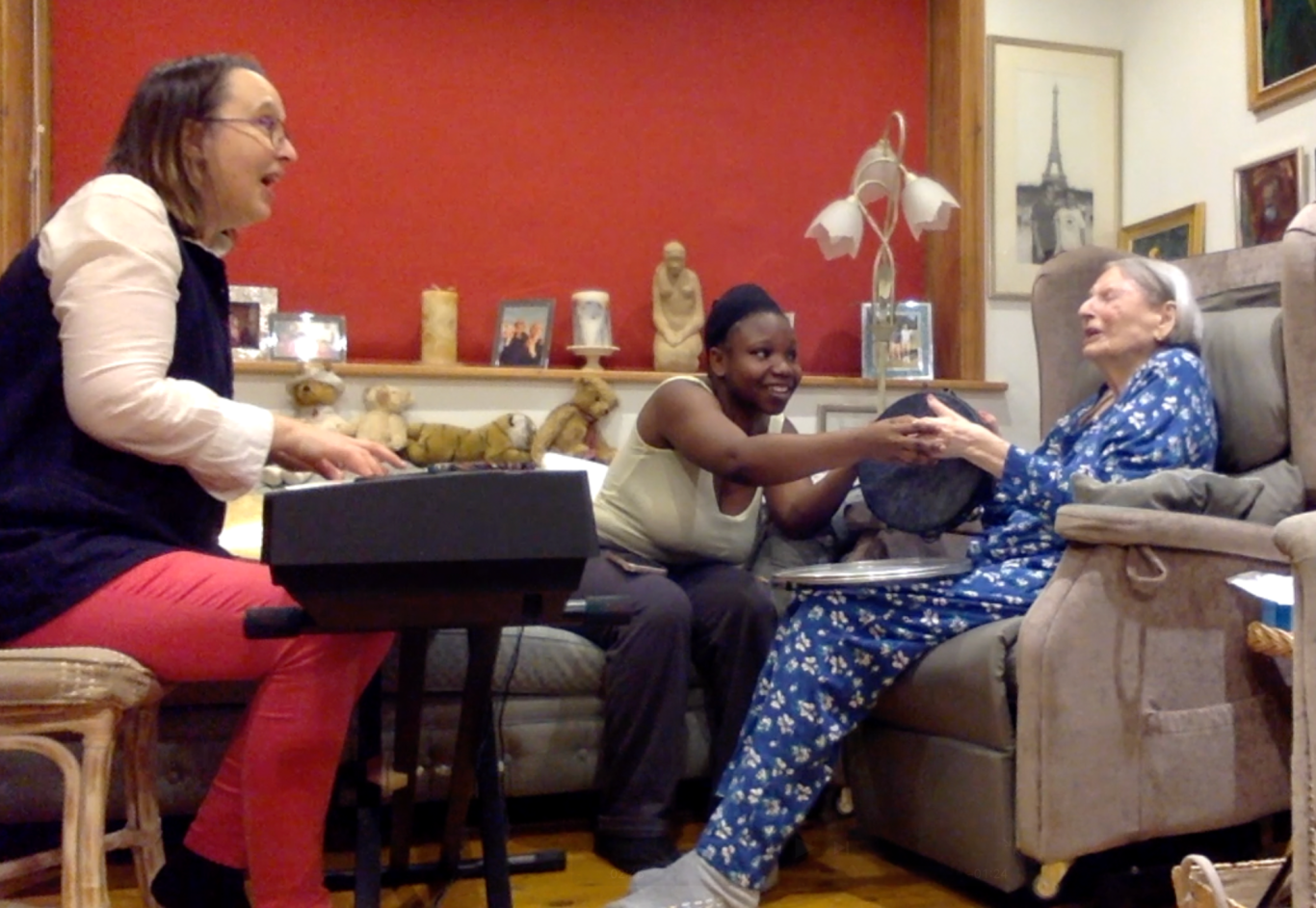
While other sessions that people experience may involve listening to music provided for them, music therapy is about making music with them. And, by giving each client control of how the music develops, it can reflect who they are and how they are in that moment.
Music-making might involve improvisation, recreating music people already know, song-writing, listening or even working towards some kind of performance - whatever emerges and whatever they prefer. Every session is person-centred and grounded in a therapeutic relationship, and every session is different.
Who is music therapy for?
Anyone and everyone! Please press play to watch the infographic:
What are the benefits of music therapy?
There are as many ways to play music as there are people! Similarly, the benefits are as many and various as the individuals that take part in it... but here are just some of the things that music therapy offers:
- a safe space in which any music-maker can be in control of the creative process,
- stimulation of and outlet for existing musical interest or skill,
- an experience of positive social interaction in a creative context,
- an experience of collective musical stimulation and expression,
- a medium in which communication can be possible without verbal interaction,
- an improvement or variation of mood,
- a sense of achievement and creative wellness,
- a creative experience moment-by-moment that demands awareness of the “here and now”,
- enhancement of self-awareness and awareness of others,
- an increase of confidence and self-esteem,
- a different experience of oneself,
- exploration and development of physical coordination,
- emotional exploration and self-regulation,
- an opportunity for self-expression,
- an opportunity to learn new skills...
- ... this list is not exhaustive!